Home › Routes › Motorhome routes › Costa de la Luz
A short route along the Atlantic coast of Cádiz, in the far south of Spain: from Conil de la Frontera past El Palmar, Los Caños de Meca and Cape Trafalgar to Barbate, Zahara de los Atunes, Bolonia and Tarifa. Here is what you need to know before you go: stops, where you may stay overnight, Spain’s new parking rule for motorhomes, and how to find campsites and motorhome stops on the AlpRoute map.
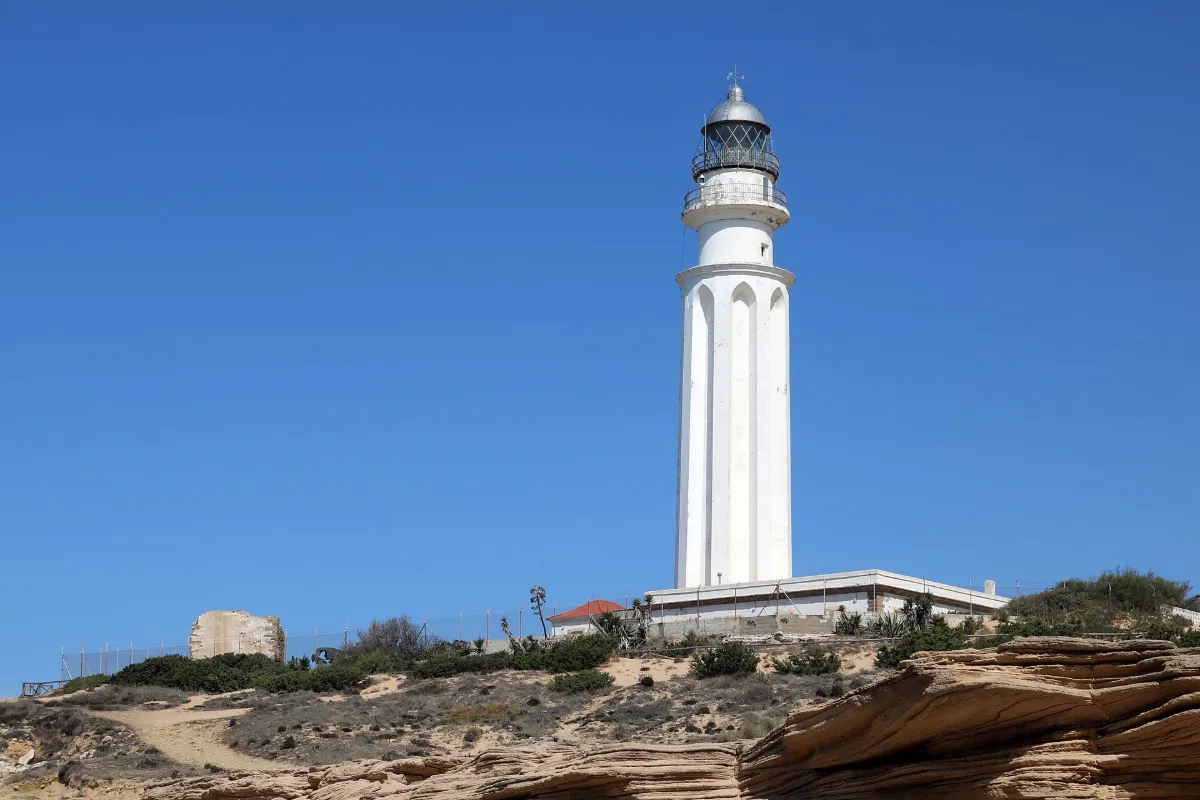
| Start and end | Conil de la Frontera to Tarifa, province of Cádiz, Andalusia |
| Distance | About 90 km by road, including the side trip to Bolonia; a little over two hours of driving without stops (our calculation with OpenStreetMap data) |
| Days | Two to three, with visits on the way (our suggestion) |
| Best time | Autumn to spring (our suggestion). According to the Junta de Andalucía, Andalusia has an average yearly temperature of 16 °C and about 3,000 hours of sun a year [2] |
| Our rating | Easy: short daily distances on main and local roads. The road to Bolonia (CA-8202) ends at the village, so you drive it there and back |
| Natural park | Between Los Caños de Meca and Barbate, the route runs through La Breña y Marismas del Barbate Natural Park [1] [5] |
| Overnight | Only in permitted areas: campsites and authorised motorhome areas [3] |
| Parking rule | Since 1 October 2026, a motorhome parked on a public road in Spain must not extend anything beyond its outline, must stand only on its tyres and must not release fluids from the living area [4] |
Short distances. Overnight only in permitted areas [3].
We found no general restriction for this route in the official sources we checked. Follow local signs.
On public roads, nothing may stick out beyond the vehicle and it must stand on its tyres only; chocks are allowed [4].
The official tourism website of Andalusia describes the stretch from Tarifa to Los Caños de Meca as a motorcycle route of about 58 km [1]. We drive it the other way round, from north to south, and start a little further north in Conil. The day stages are our suggestion.
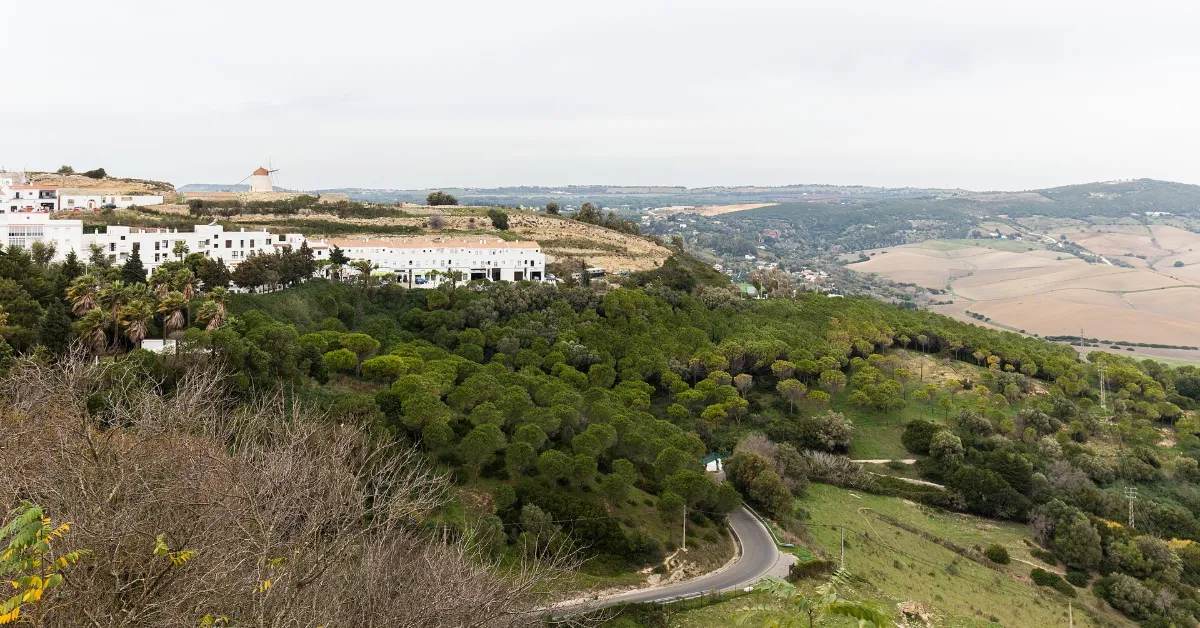
Conil is a coastal town known for its white houses; its beaches run from the town almost to Cabo Roche [5]. The road continues south to El Palmar, a beach on the 7 km coastline of Vejer de la Frontera. Vejer itself is a few kilometres inland, on a hill, with narrow, steep streets [5]; we advise against driving into the old town with a motorhome. At Los Caños de Meca the beaches meet the cliffs of La Breña, and the Tómbolo de Trafalgar Natural Monument is about 2 km away [1]. The Battle of Trafalgar took place off this cape [5].
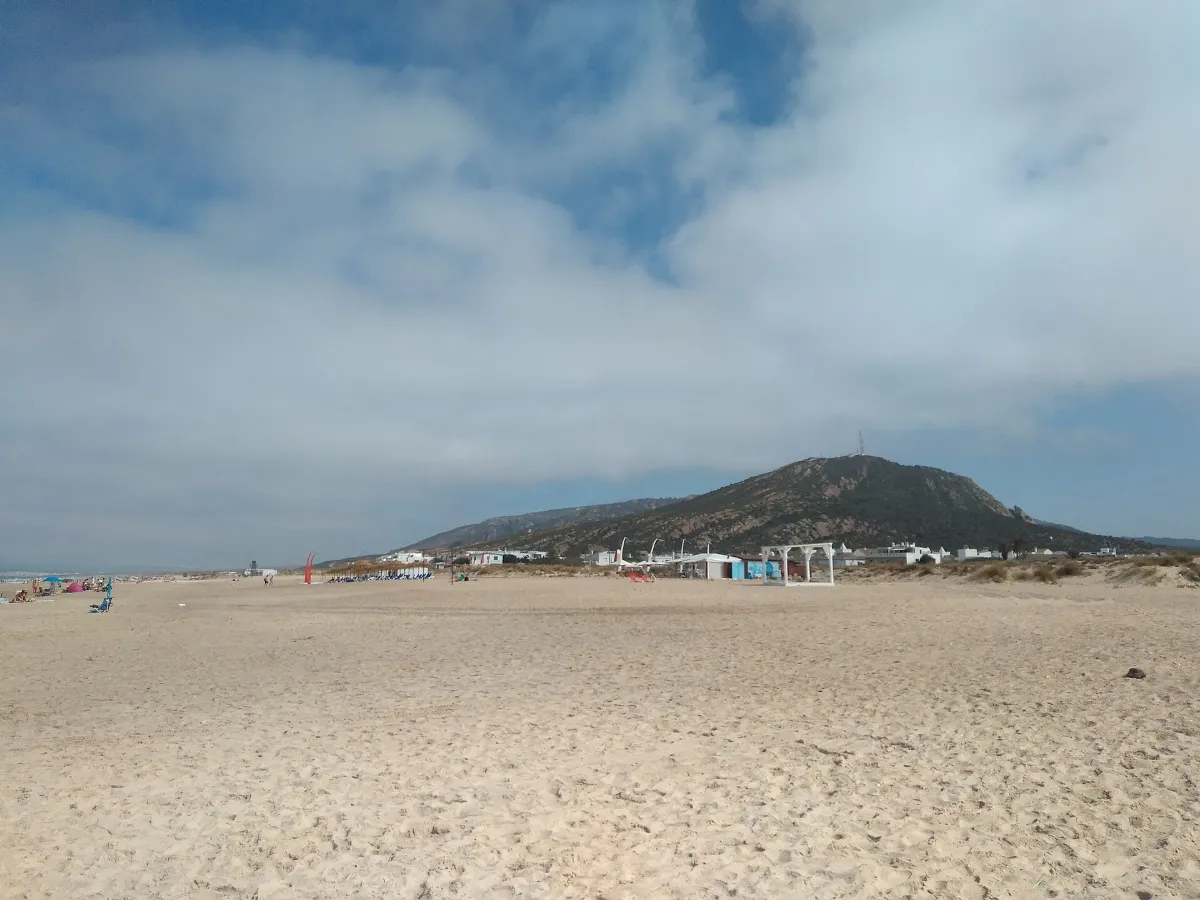
The road crosses La Breña y Marismas del Barbate Natural Park to Barbate, a town known for its salted fish [1]. Zahara de los Atunes is known for fishing, especially for its almadraba tuna, caught with a traditional system of fixed nets [1]. It has more than 6 km of beach, and its long, open beach lets the levante, the strong east wind, blow freely, which makes it popular for windsurfing [5].
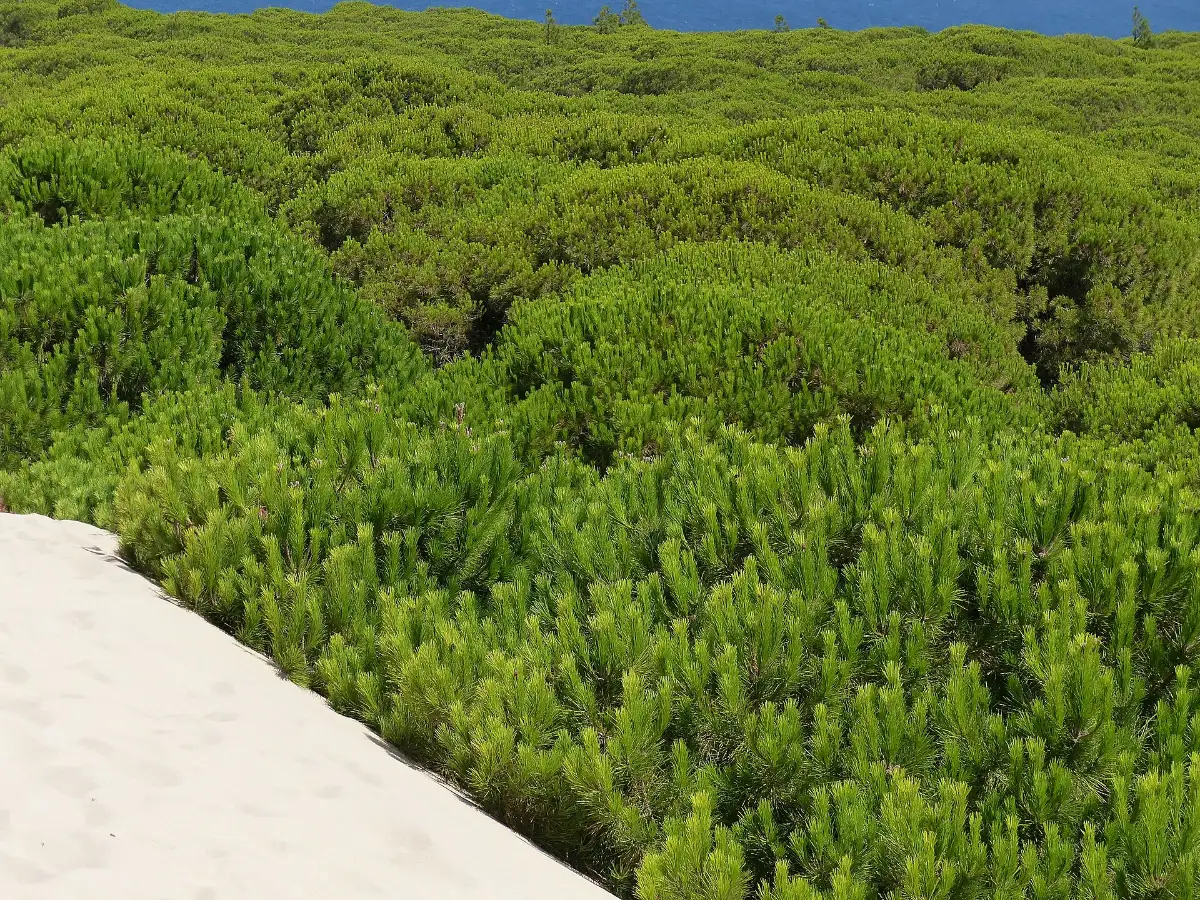
Via the N-340 and the CA-8202 you reach Bolonia. Here you will find the Bolonia dunes, including a large dune more than 20 m high and 300 m wide, and the Roman site of Baelo Claudia [1]. Back on the N-340, you continue to Tarifa, which lies between the Mediterranean and the Atlantic [1]. The Junta’s guide calls Tarifa a windsurfing paradise and mentions the Ensenada de Valdevaqueros with its large dunes [5].
The Junta de Andalucía asks motorhome users to stay overnight only in permitted areas [3]. Its June 2023 guide lists only one authorised motorhome area on this route [3]. Near Tarifa, the official tourism website of Andalusia lists campsites [6] [7].
| Start | For Conil, we found no authorised motorhome area in the official sources we checked. Look for campsites on the AlpRoute map and check their opening periods. |
| On the way | Área Caños de Meca, C/ Galeón s/n, Los Caños de Meca (Barbate). Listed in the Junta de Andalucía’s June 2023 guide as an authorised motorhome area with 60 places, open all year [3]. We could not confirm its current details on its own website; contact the area before you go. |
| End | Camping Torre de la Peña, opened in 1968, opposite the beach near Tarifa, with areas for camping and caravanning [6]. Camping Río Jara, in the protected natural areas of the Strait and of Los Lances beach [7]. The tourism website gives no opening periods; contact the campsites before you go. |
Royal Decree 518/2026 added a new paragraph to Article 92 of Spain’s General Traffic Regulations; it has applied since 1 October 2026. On public roads, a motorhome must be parked without extending anything beyond its outline, standing only on its tyres (chocks or wedges are allowed), and without releasing fluids from the living area. Town councils still regulate parking on urban roads through their own bylaws [4].
On the AlpRoute map you can see campsites and motorhome stops along this coast, free of charge and without an account. Set your vehicle profile with height, width and weight. Before you stay, check that each stop is a permitted overnight area.
Open the Costa de la Luz route in AlpRoute
The map opens directly on the route. Planning your own multi-stop tour with GPX export is part of AlpRoute Pro, a paid subscription.
AlpRoute does not show live opening times, free spaces or road conditions. Rules in the natural parks are set by the Junta de Andalucía, and local parking rules by each town council. Check them before you set off.
No. The Junta de Andalucía asks motorhome users to stay overnight only in permitted areas. Plan each night at a campsite or an authorised motorhome area. Town councils regulate parking on urban roads through their own bylaws.
Royal Decree 518/2026, published in the BOE on 26 June 2026, added a new paragraph to Article 92 of the General Traffic Regulations. A parked motorhome must not extend anything beyond its outline, must stand only on its tyres (chocks or wedges are allowed) and must not release fluids from the living area. The rule has applied since 1 October 2026.
The Junta de Andalucía’s June 2023 guide lists Área Caños de Meca, with 60 places, as open all year. We could not confirm its current details on its own website. Near Tarifa, the official tourism website of Andalusia lists Camping Torre de la Peña and Camping Río Jara but gives no opening periods. Contact each place before you go.
By our calculation with OpenStreetMap data, it is about 90 km by road from Conil de la Frontera to Tarifa, including the side trip to Bolonia, or a little over two hours of driving without stops. With visits to the villages and beaches, we suggest two to three days.
It can be. The Junta de Andalucía’s guide says the levante wind blows freely over the long beach of Zahara de los Atunes, and it calls Tarifa a windsurfing paradise. In a high-sided vehicle, drive carefully on open stretches.
No. AlpRoute does not show live opening times, free spaces or road conditions. You can see campsites and motorhome stops on the AlpRoute map; check opening times and rules with each place before you go.
Photos from Wikimedia Commons under Creative Commons licences or CC0; author, source and licence are named under each photo. The photos were resized and converted to WebP; no other changes were made. The resized versions of CC BY-SA photos are shared under the same licence.
Also available in: Deutsch · Français · Italiano · Español · Türkçe


